
Wagyu myths
Not all beef is created equal

Recs at the bottom!
I find myself wearing many food-related hats, from consulting for food & beverage developers to leading private food tours.
One thing I get asked a lot is “I want to eat wagyu” or “Where is the best wagyu? Is it the Kobe beef?”
Or — “I had wagyu in the US and it was just ordinary beef?”
So let’s break it down.
What is wagyu?
“Wagyu” literally just means “Japanese cattle,” but in practice, it refers to four breeds — Japanese Black, Japanese Brown/Akaushi, Japanese Shorthorn, and Japanese Polled. It can also include certain crosses among those breeds. Japanese Black makes up the overwhelming majority of domestic wagyu production — about 95%. It’s highly likely if you’re eating wagyu in Japan, you’re eating Japanese Black.
The Japan Livestock Products Export Promotion Council says the secrets to its deliciousness are taste, texture and aroma. This has been a learning curve for me over my 12+ years in Japan — understanding the importance of texture and aroma as equal to taste. Indeed, the Council describes the aroma of wagyu as sweet, like peach and coconut, with a retronasal aroma that develops as you chew.
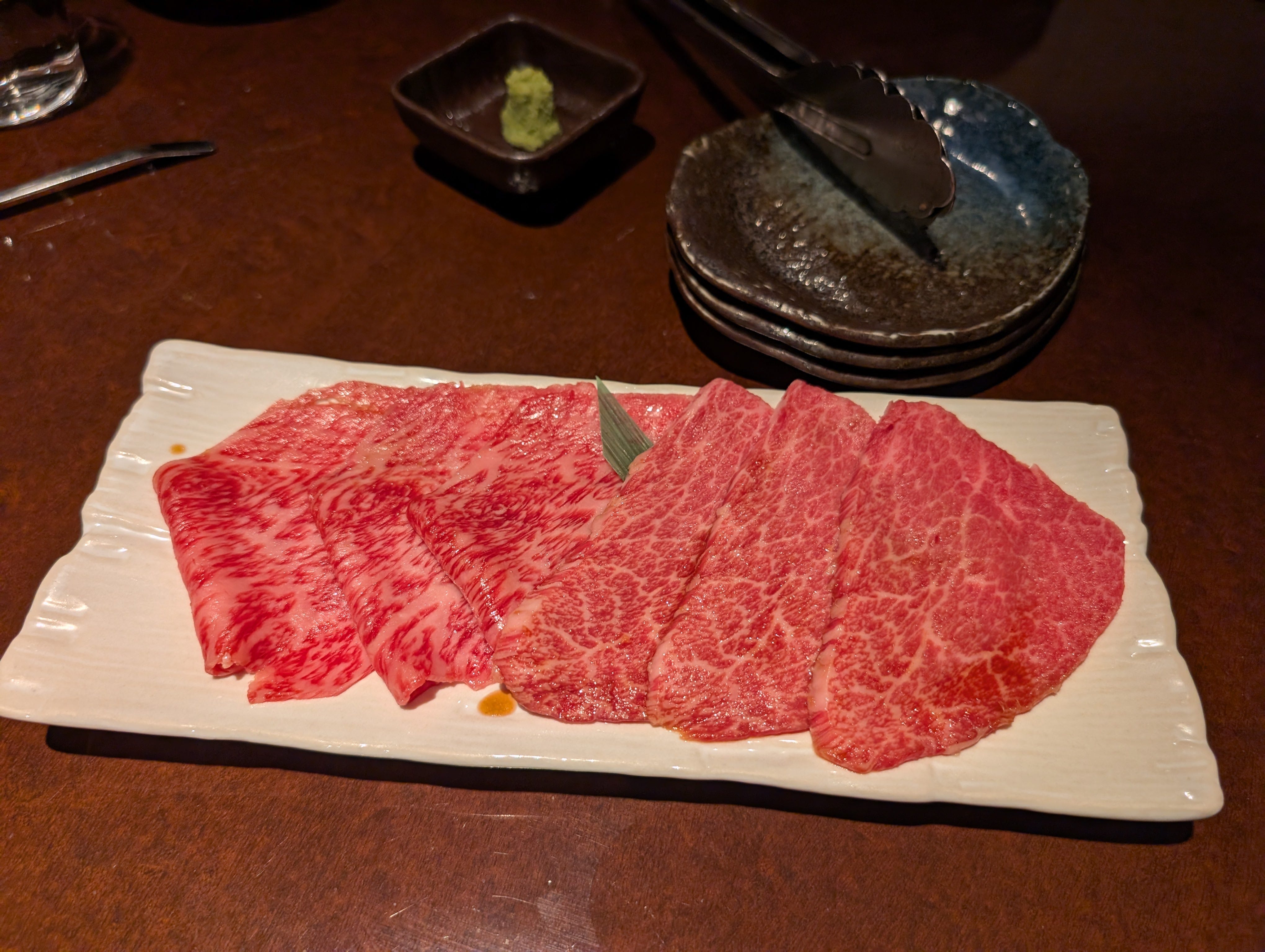
The carcass is graded according to its fat marbling, meat colour/lustre, firmness/texture, and fat colour/quality.
So what does a score A5 actually mean?
A, B, and C designate the amount of usable meat obtained from a carcass. Far more important for the consumer (us!) is the number. Grade 5 represents the highest grade of meat quality — including a Beef Marbling Standard (BMS) score of 8–12.
Which brings me onto the catch! Wagyu can be overwhelmingly rich and fatty for some people. For those who like slightly leaner or firmer textured beef, A5 isn’t suitable.
In short, the ideal “quality” of the Japan Meat Grading Association isn’t everyone’s cup of tea — just like someone might say “Hold the mustard!” on a roast beef sandwich.
What is Kobe beef?
Just a brand of wagyu — but one of many rigorously regulated brands.
All Kobe beef is wagyu; not all wagyu is Kobe beef.
Under the official Kobe Beef Marketing & Distribution Promotion Association rules, Kobe Beef must come from Tajima cattle, a strain of Japanese Black wagyu, and it must meet strict certification standards after slaughter. The cattle must be a heifer (a young female cow that has not given birth) or a steer (a castrated male) — these tend to have a better fat-to-muscle ratio for producing tender meat compared to bulls.
The cattle must also be between 28 and 60 months of age, and within a specified weight range. They must be bred in approved breeding farms, raised in approved raising farms and processed at approved slaughterhouses. The resultant beef must meet grade requirements including yield grade A or B, meat quality grade 4 or higher, and BMS marbling score of 6 or higher.
Geographical identity also plays a part here. Tajima cattle are associated with Hyōgo Prefecture — of which Kobe is the capital. Both Kobe Beef and Tajima Beef are registered under Japan’s Geographical Indication protection system.
Nowadays, there are hundreds of beef brands in Japan, and attention is no longer concentrated only around Kobe. Kagoshima remains a powerhouse after its 2022 national competition success, and we’ve also seen record-breaking prices Matsusaka beef auction prices — a whopping ¥52.59 million in December 2025. I’m personally a big fan of Olive Beef from Kagawa, where the cows are fed a special diet of pressed olives, which is said to increase the oleic acid content of the meat, making it extra tender and giving it lighter, cleaner-tasting fat that is easy to digest.
So how did Kobe beef get famous? Why did beef brands develop? A little bit of history…
Meat consumption in Japan was largely prohibited for hundreds of years due to Buddhist beliefs in reincarnation, resulting in strong social taboos — you wouldn’t want to accidentally eat your grandmother. Of course, there were creative workarounds for those in landlocked, countryside areas. For example, wild boars were relabelled as “mountain whales” — just big fish :) (A fun aside, but a similar thing is widely rumoured to have happened in Venezuela with capybara. Sometime in the 16th to 18th centuries, clergymen petitioned the Catholic Church to designate capybara — the world’s largest rodent — as a fish so it could be eaten at the Lenten dinner table.)
When Japan opened up to contact and trade with the outside world in the mid-1800s, it began rapidly westernising and industrialising — and that included introducing meat to the diet. It was initially quite a shock to the Japanese public. When it was first reported in 1872 that Emperor Meiji was eating beef, some people were so outraged that protestors broke into the Imperial Palace!
Outrage was short-lived, however, as beef just tastes really, really good, and beef — and many other meat dishes — were rapidly incorporated into the Japanese diet.
Kobe got famous because it was the right beef, in the right port city, at the right historical moment.
The region happened to have access to a stock of Tajima cattle and a port that opened in 1868. When foreigners settled in Yokohama from 1859 onward, they wanted beef — and it was through the port of Kobe that supplies were shipped to them. This meant “Kobe beef” managed to get a reputation before 1900.
That’s only part of the story, though.
“Kobe beef” as a formally certified brand dates from 1983, when the Kobe Beef Marketing & Distribution Promotion Association was created to define what counts as real Kobe beef, issue certificates, designate sellers, and protect authenticity. It’s done a good job at promoting it domestically and internationally.
There was a push from the 1960s onwards in Japan to boost the quality of beef. That came partly due to the mechanisation of agriculture, which saw cows replaced with mechanised ploughs. People began thinking about ways to extract extra value. So as Japan revved up its economic miracle and the economy began to boom, beef brands were established as luxury new gourmet products.
How do I know if I’m eating real Kobe beef?
This is easier in Japan. If you’re walking past touristy street stalls in Asakusa or Tsukiji advertising “Kobe beef sticks” on large English signs, you should be sceptical. Otherwise, you can pretty much count on places advertising truthfully.
However, if in doubt, ask to see the certificate or individual identification number; real Kobe Beef is issued a certificate and handled by registered sellers/restaurants. You should be able to search for the carcass number on the Kobe beef website and the restaurant should also have an official bronze statue portraying the face of a cattle.
Most importantly though: Kobe beef shouldn’t be your goal (in my humble opinion). It is far from my favourite beef — I’ve not tried all the brands, but I enjoy delightful unbranded wagyu on an almost weekly basis in Japan.
Why does American wagyu taste different?
Put simply — it’s most probably not the same thing.
First of all, “wagyu” in the U.S. often means “American wagyu” — cows that have Japanese wagyu genetics but are often crossbred with Angus or other cattle.
The grading system is also different, and not focused around aroma and texture like the Japanese system. In January 2025, the newer USDA “Authentic Wagyu Beef Program” came into effect, requiring wagyu genetics plus U.S. Prime and a minimum USDA marbling score of Moderately Abundant 00, but that still does not automatically mean “Japanese A5.”
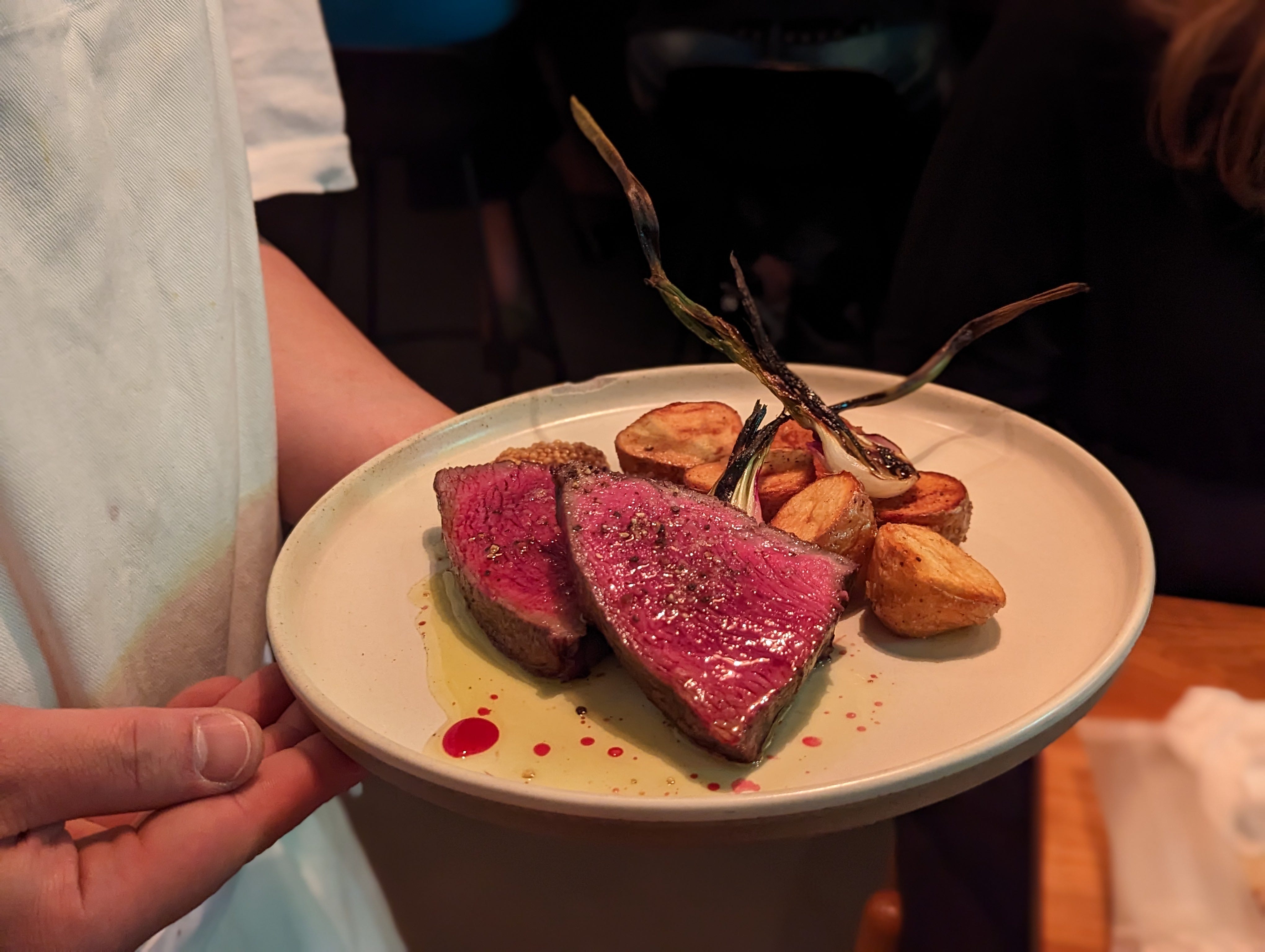
Lastly, the cooking is key. Japanese A5 is so rich that it is usually best in small portions or thin slices lightly seared. I remember being outraged when first going to a steak teppanyaki and learning the final steak was only 80g (2.8 oz). But after two bites, I was super grateful. Serving wagyu as a 10 oz steak would quite frankly present an unpleasant challenge.
Where to eat wagyu in Tokyo
The key point here is that you don’t have to go to a wagyu specialty place. Almost any high-end restaurant or izakaya is likely to have some wagyu on the menu.
The truth is that going out for a whole wagyu course isn’t something that’s super common among my foodie friends and me. It’s kind of overwhelming and I’ve fully embraced the “little portions of lots of different things” approach to dining.
That said, there are some excellent options.
For yakiniku, Yoroniku has rightfully earned a reputation for quality and, at some locations, relative affordability (dinner courses from 10,500 yen at Ebisu Yoroniku); it has several locations in Tokyo. Just two weeks ago, I visited its sister restaurant Namaiki in Kanda,, which has slightly cheaper offerings (courses from 7,880 yen). We got the fancier truffle chateaubriand course (10,880 yen), culminating in a refreshing basil-lemon kakigori shaved ice dessert. It was all very tasty — and I loved the Korean-inspired pickles and kimchi — but it’s a very curated experience. The staff work efficiently like clockwork, stopping by the table to cook delicate slices of meat and serve them like miniature rolled artworks. The whole operation moves like a well-oiled machine.
For a more casual yakiniku where you can cook it yourself, head to Yakiniku-en in Azabujuban where the price-quality ratio is excellent and you can get a surprisingly decent glass of wine (read my article about it here). There are no reservations so get there early and be prepared to queue.
For teppanyaki, I’ve not explored nearly enough as I always go to the Sumitomo Club’s restaurant with my friend who is a member. My husband is a huge fan of Hakushu in Shibuya, which serves Kobe beef and is seemingly beloved by locals and visitors. I’ll be visiting the renowned Shima soon, famous for its steak sandwich.
Other restaurants where I’ve had some great beef:
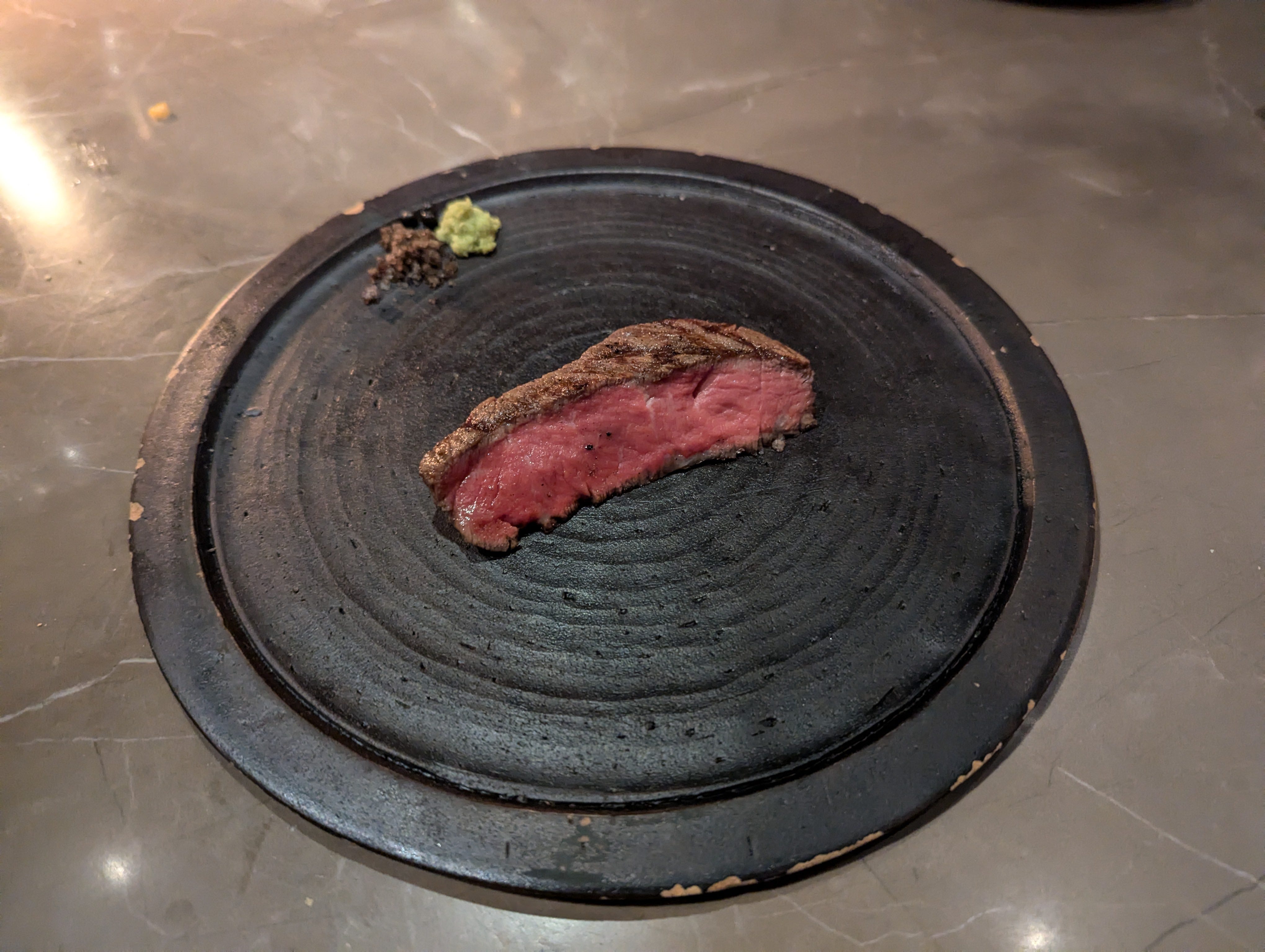
NatuRe Tokyo, near the Olympic stadium. Chef Nae Ogawa opened this French-Japanese restaurant in Hawaii before bringing the concept to Japan in 2024. Promoting sustainability and a farm-to-table ethos, Ogawa serves delicious akaushi from cows that have given birth and can no longer be bred from. This is grilled over the wood fire and is simply delicious. I thought the rest of the menu was excellent too.
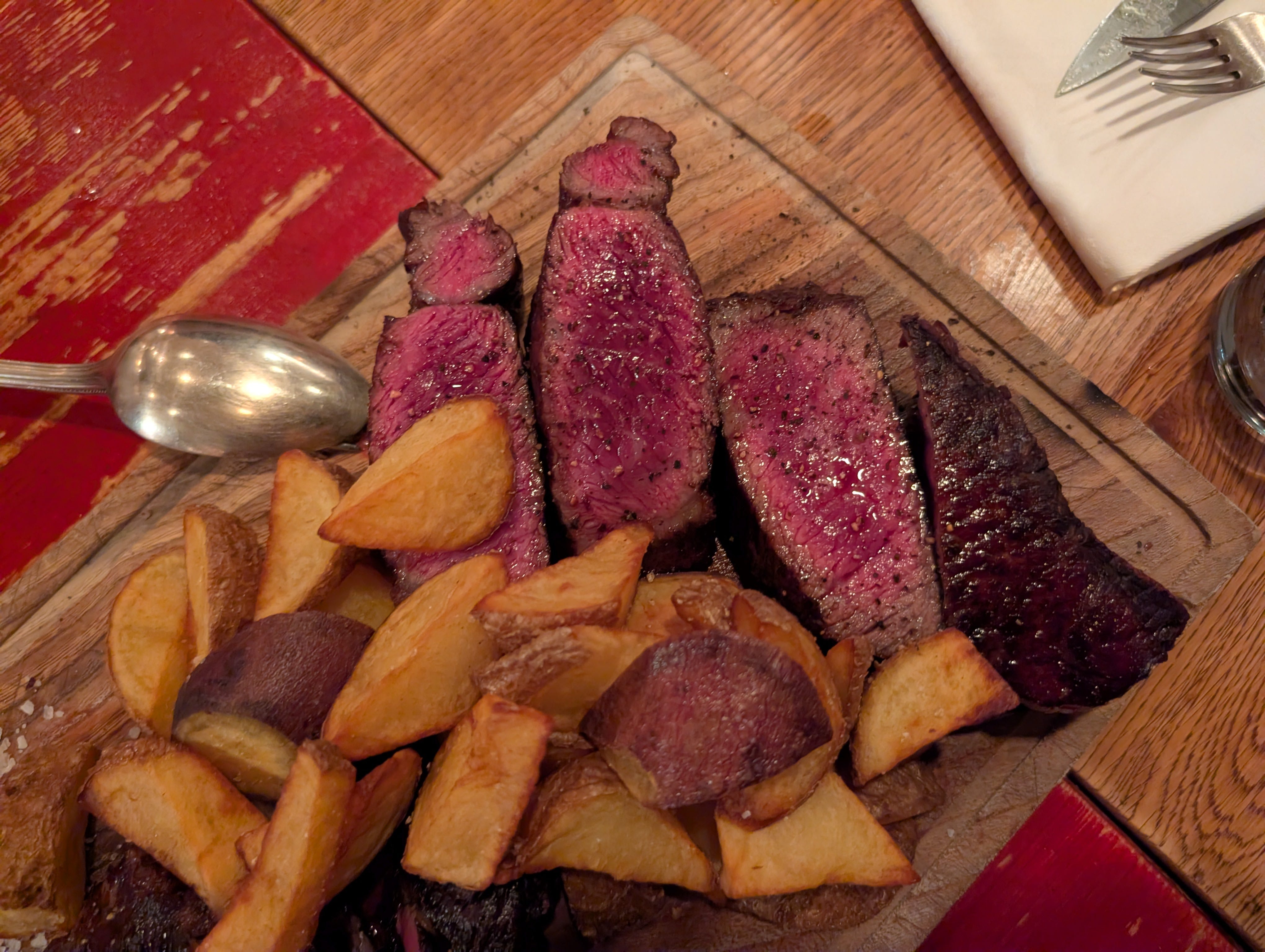
Shonzui, Roppongi. One of the first places in Tokyo to specialise in natural wines, its steaks are on point, sourced from various locations, including 30-day-aged Hokkaido akaushi (although this varies by the day). This is definitely a place to go if you’re looking for the proper decadent steakhouse experience and if you’re paying in dollars — it definitely charges for its concept and location.
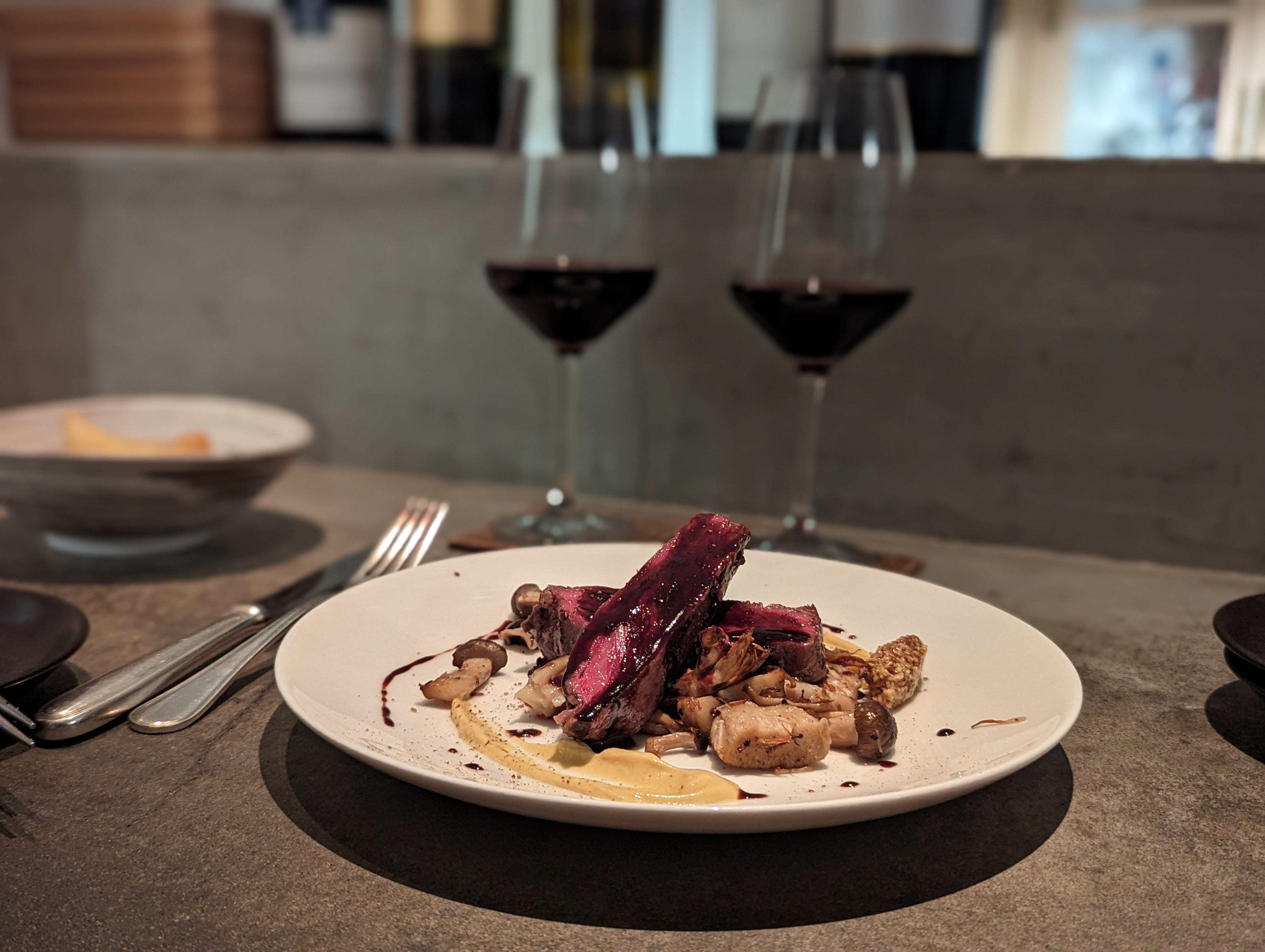
EVEN MORE PLACES
Cuvée, Azabujuban. Stopped by briefly for late night wine and steak. May have been influenced by the fact it was one of the first “dates” I went on with my now-husband. The place is definitely aiming for that luxury wine bar vibe, so it is perfect for a quiet date.
1st, Gotokuji. A small place in my neighbourhood run by a guy who spent time in Australia. The wagyu is often too rich for me so sacrilegiously I sometimes go for the Australian beef! His vegetable parfaits and pastas are very good too.
Imahan, multiple locations. It’s a classic with roots dating back to 1895 and later garnering fame for popularising quality sukiyaki bento lunchboxes during the 1950s. If you go to their original Ningyocho location, they have a delicatessen for takeout comfort food. I love to compare their menchikatsu (minced beef croquette) with the sukiyaki (simmered sweet-salty beef often with veggies and tofu) croquette.
NOT IN TOKYO: Arai, Shirakawa-go. If you’re visiting this charming village and its thatched-roof folk houses, you absolutely need to get the Hida Beef lunch set here.


I've always thought one of the biggest misconceptions in food is that the highest grade automatically equals the best eating experience. I've had A5 that felt almost too rich.
Curious how you'd compare top Hanwoo, which some people argue has a more pronounced beef flavor without quite the same level of richness (and I tend to agree).