Spice Lab Tokyo
Where Indian and Japanese cuisines meet

A trip to Spice Lab Tokyo is an annual event for me, if not, biannual.
At first glance, it looks like upscale modern Indian dining, but it’s not quite that.
SLT takes Indian cuisine and reimagines it through Japanese seasonal ingredients and techniques in ways that are as clever as they are creative.
This is all thanks to the genius of Executive Chef Tejas Sovani. I first came to better understand his way of thinking a few years back when I was filming a short TV about innovative cuisine in Tokyo. Tejas invited me into the kitchen and walked me through the ingredients and menu. He had learned to make tofu, and incorporated it into dishes, he told me, after being inspired by vegetarian temple cuisine in India and shojin ryori, Japanese Buddhist temple cuisine — also vegetarian, and which uses a lot of tofu.
The menu at Spice Lab Tokyo is way more than “We’re in Japan so let’s just use Japanese ingredients.” There’s knowledge, logic and creativity all rolled into delicious course menus, which meander across India and through Japan’s seasons.


I stopped by recently to sample the end of the winter menu Signature Course. As a longstanding fan, I honestly think this might be my favourite meal I’ve enjoyed there (and I’ve really enjoyed them all).
Things started off bold and fun with a reimagining of aloo chaat made with purple potato and presented as a nest — perfect crunch topped with white currants, red currants, yoghurt and passion fruit and mango jelly. This was served shorba — a tomato, mushroom, and ginger soup — addictive through the depth of its umami,
We next tucked into some “Street Food” with flavourful lamb samosas. These were followed by a confident Japan-meets-India concoction of Japanese-style omelette topped with tandoori chicken and renkon (lotus root) chips.
Then, a beautifully-formed mini dosa stuffed with duck. “I’m most proud of this dish,” Tejas said. He kept it simple, honouring the dish and paying particular attention to the texture — it should always have a slight spongy, softness in the middle and crispy exterior, he told us.
Fragrant, and topped with three delicate dots of tomato, yoghurt and mint-coriander sauce so that each mouthful took us on a different journey.
We moved onto “Kosambari” — a South Indian salad — but in this case, seasonal vegetables with a tamarind-teriyaki sauce and a scoop of Jerusalem artichoke sorbet, which I adored.


The seafood course arrived with lobster, its natural sweetness perfectly accentuated by an accompanying shrimp, crab and coconut broth, topped with caviar for salty luxury.
The main was lamb loin and lamb shank with lily bulb in a richly spiced lamb stock broth, accompanied by a mini naan — and by one of Tejas’ signatures, his famous dal makhani. I can never eat enough of this stuff, and I almost licked the bowl clean. Fortunately, I rationed out the naan so I had enough for mopping and to retain a modicum of dignity.
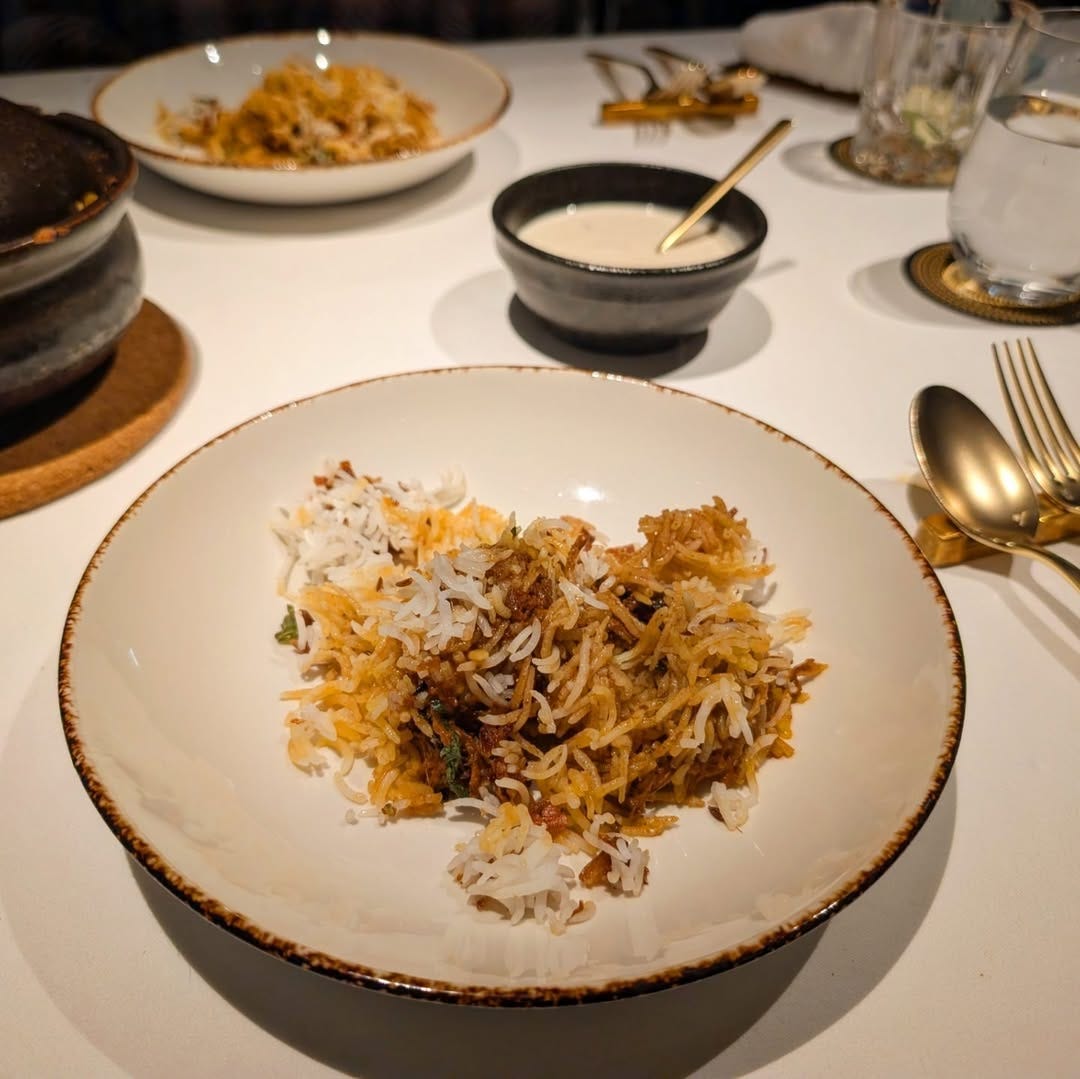
No meal at SLT is complete without a biryani — this time, oxtail, fiercely flavoured and flecked with caramelised onion sweetness.
Dessert came in the form of a chocolate tuile hiding apple ice-cream, apple chips and caramelised walnuts beneath it. And just when we thought we couldn’t possibly eat any more (I also finished the biryani singlehandedly), we rounded off with a jalebi sando with ricotta cheese — a delicious interplay of salty-sweet.
I also need to shout out to my excellent cinnamon whisky sour and a Rasa Syrah 2022 red wine from Nashik (Indian wine is underrated)!
I didn’t intend to write about every single course — but here we are. They were all too good.
As I tottered home several kilos heavier, I reflected on just what an excellent name the restaurant has — Spice Lab Tokyo is exactly that.